
Thermoregulation:
Thermoregulation is the maintenance of physiologic core body temperature by balancing heat generation with heat loss. A healthy individual will have a core body temperature of 37 +/- 0.5°C.
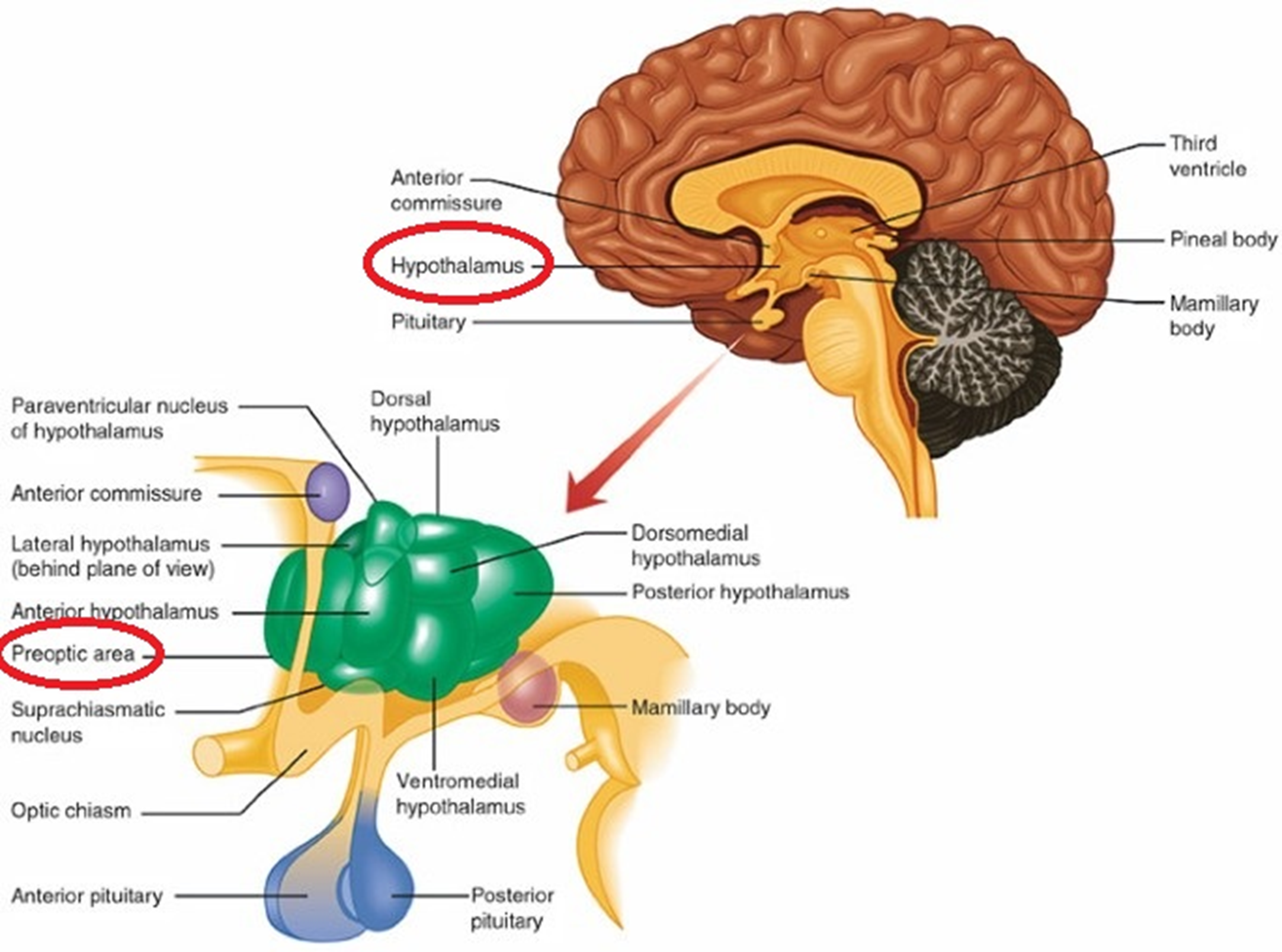
The human body's thermostat is the hypothalamic thermoregulatory center, which, more specifically, is located in the preoptic area of the hypothalamus which regulates temperature homeostasis. The hypothalamus contains temperature sensors, which receive information via nerve cells called thermoreceptors. The body has peripheral and central thermoreceptors. The peripheral thermoreceptors are located in the skin and sense surface temperatures, while central thermoreceptors are found in the viscera, spinal cord, and hypothalamus and sense the core temperature. Variations in body temperature activate these thermoreceptors, which inform the preoptic area of the hypothalamus. This area then activates heat regulation mechanisms to increase or decrease body temperature and return it to baseline.
Homeothermy in human
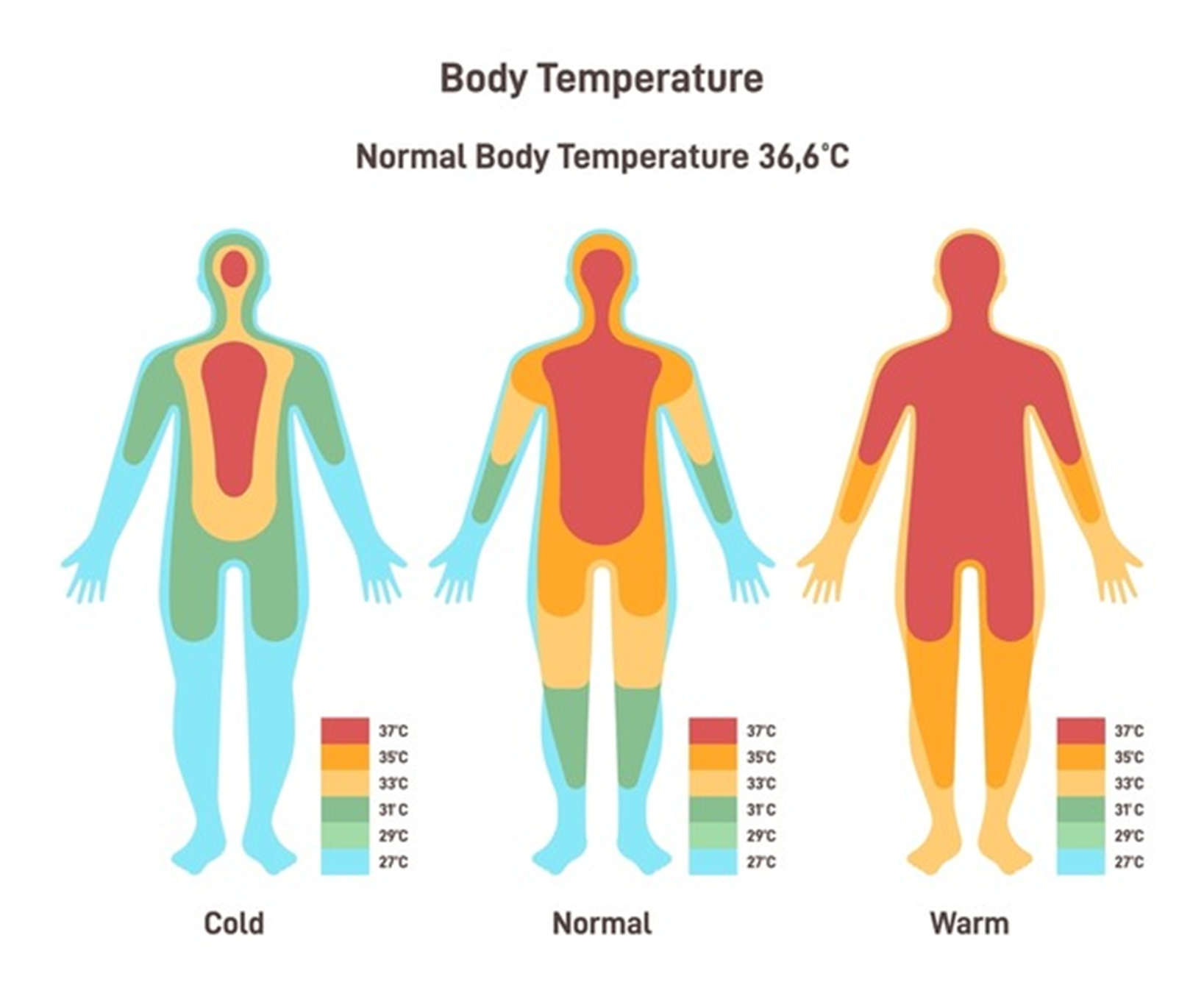
Homeothermy in humans is the ability to maintain a stable internal body temperature (around 37°C) , regardless of external environmental temperature fluctuations. central internal or core (brain, intrathoracic organs, intraabdominal organs) temperature
thermogenesis
and thermolysis
In the absence of thermoneutrality, humans expend energy to maintain body temperature. Thermogenesis is the process of heat production in the human body, while thermolysis is the process of heat loss. Both are crucial for thermoregulation, the body's ability to maintain a stable internal temperature. Thermogenesis occurs through metabolic activity, muscle contractions, and the action of adipose tissue, which dissipates energy as heat. Thermolysis involves various methods of heat exchange, including radiation, convection, conduction, and evaporation (sweating).
Energy balance
Energy
inputs= food consumed; Outputs = energy
expenditure
If E inputs = E outputs the mass balance is zero (normal healthy adult human) steady state, stable weight.
If E inputs ˃ E outputs the results are positive: growing organism: stocks are increasing (obesity).
If E inputs < E outputs the results are negative: a period of weight loss and aging, stocks are decreasing.
Available
methods for determination of energy expenditure
There are many methods for determining EE.
Energy can be measured by calorimetry.
Calorimetry can be:
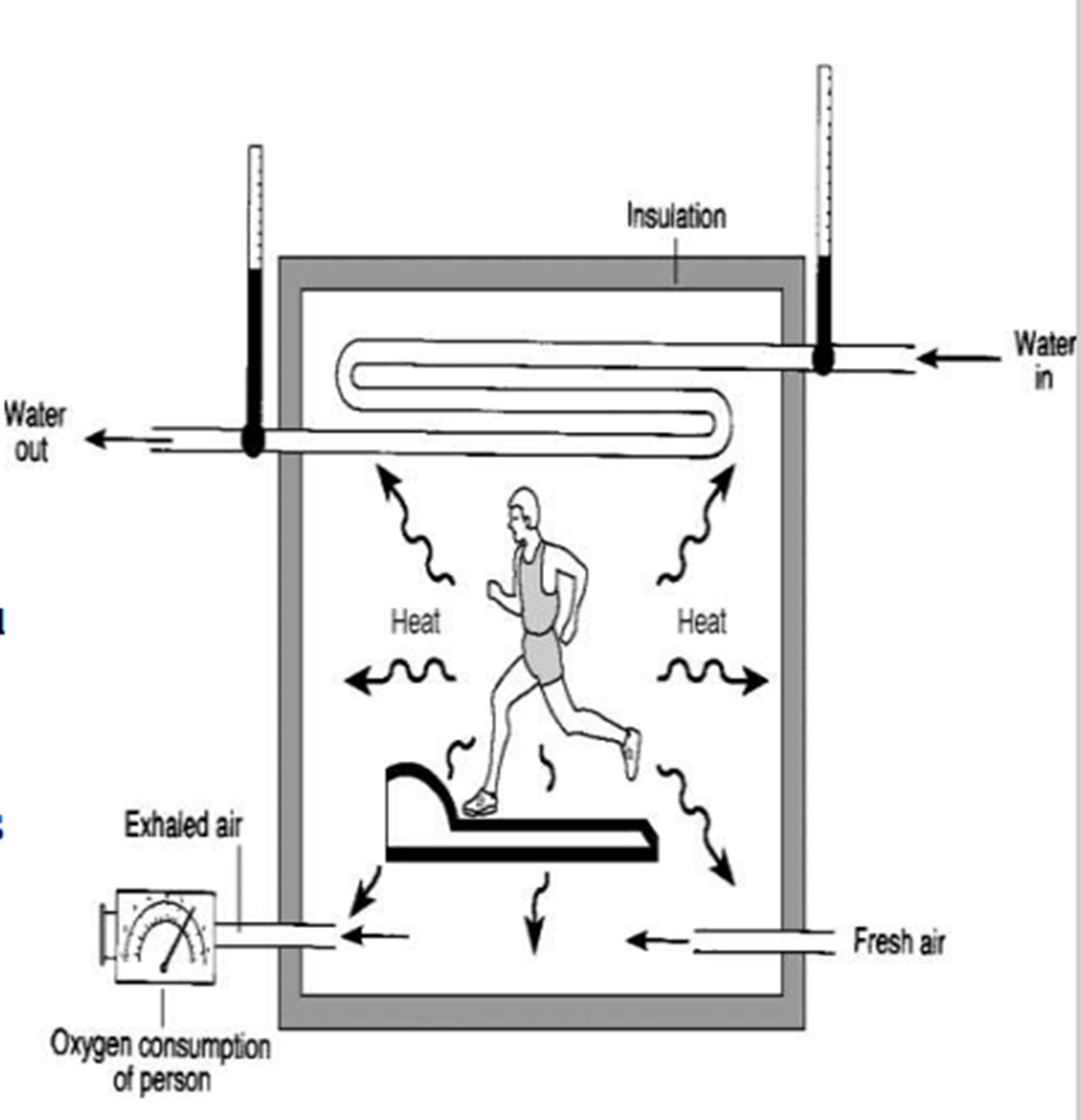
The directly determination of EE represents the measurement of heat exchange between body and environment. This method measures the sensible heat released by the body(T° out –T° in) , as well as the water steam released through respiration and skin. It requires an isolation chamber, hermetically sealed, highly sophisticated and large enough to allow some degree of activity. Although it is considered a gold standard method, it is not widely used due to its high complexity and cost.
Indirect calorimetry
Food calorimetry allows us to determine the number of calories per gram of food. In this activity, a piece of food is burned, and the released energy is used to heat a known quantity of water. The temperature change of the water is then used to determine the amount of energy in the food.
Theoretical value – biological value = energy losses (digestive losses (5% of energy intake), non-metabolizable waste mainly urea eliminated in the urine for proteins.
Theoretical energy value of food: This is the caloric value of 1 g of food, burned completely in a calorimetric bomb
1g de carbohydrate→4,1 Kcal
1g de lipid→9,3 Kcal
1g de protein→5,7 Kcal
biological energy value of food: This is the caloric value of 1g of food, metabolized by the human body.
1g de carbohydrate→4 Kcal
1g de lipid→9 Kcal
1g de protein→4 Kcal
Bomb Calorimeter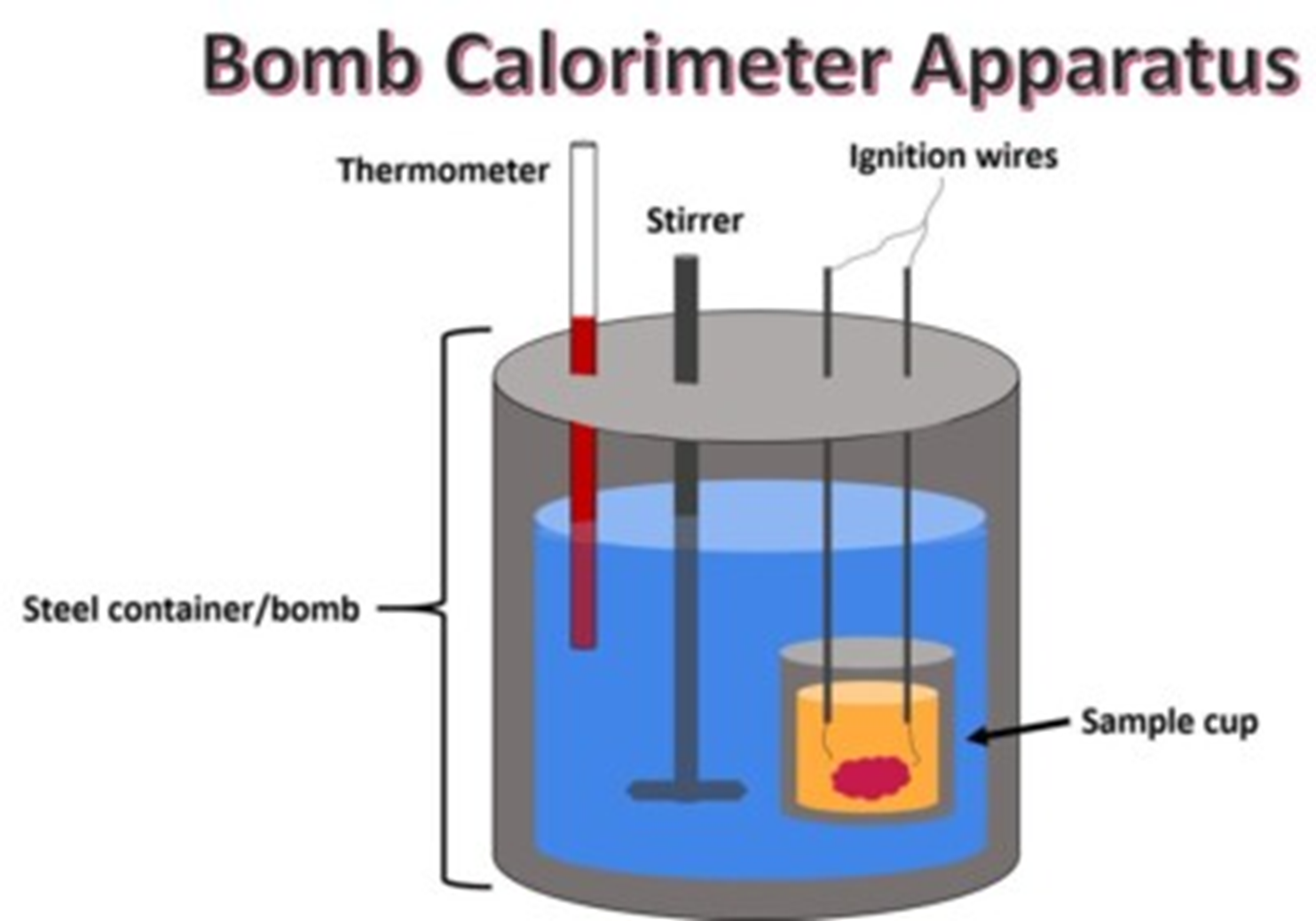
Knowing
the weight of each nutrient in the food ration allows the calculation of the practical energy intake or caloric ration Q: Q Kcal = 4(C) + 4(P) + 9(L)
Exemple : Calculate the calorie intake in Kcal of a subject whose food intake is composed of: 300g of C, 100g of L and 150g of P
The calorie intake in Kcal of a subject is : Q = 4(300) + 4(150) + 9(100) = 2700 Kcal
Respiratory calorimetry
- It requires the subject to be in a stable state and at rest for at least 15 to 30 minutes.
- It is based on the measurement of the volume of oxygen consumed per unit of time in l/min by spirometry: V*O2 and on knowledge of the thermal coefficient of oxygen kcal/l of O2: C
The energy expenditure kcal/h or Q is:
Q = C x V*O2
This is the caloric value of 1L of oxygen when it is used to specifically burn carbohydrates, or proteins, or lipids.
5 Kcal for carbohydrates/l of O2;
4.70 Kcal for lipids/l of O2;
4.50 Kcal for proteins/l of O2.
0.5 X 4.83 = 2.41kcal/min donc 2.41X 20 = 48.kcal/20minutes
Respiratory quotient