
Introduction
Dietary intake is the amount of food needed to ensure the metabolic function of a healthy individual.It must be quantitatively sufficient to meet energy expenditure and qualitatively balanced to ensure optimal intakes of essential amino acids and fatty acids, water, mineral salts, and vitamins..
Types of Nutrients
Nutrients are chemical substances required by the body to sustain basic functions and are optimally obtained by eating a balanced diet. There are six major classes of nutrients essential for human health: carbohydrates, lipids, proteins, vitamins, minerals, and water.
Carbohydrates, lipids, and proteins are considered macronutrients and serve as a source of energy. Water is required in large amounts but does not yield energy. Vitamins and minerals are considered micronutrients and play essential roles in metabolism, and they are not source of energy
What are Dietary Reference Intakes?
Dietary Reference Intakes (DRIs) are reference values that are quantitative estimates of nutrient intakes to be used for planning and assessing diets for healthy people. They include both recommended intakes and Tolerable Upper Intake Level as reference values
Recommended Dietary Allowance (RDA): the average daily dietary intake level that is sufficient to meet the nutrient requirement of nearly all (97 to 98 percent) healthy individuals in a group,(eg RDA for vitamin D is 15 µg)
Tolerable Upper Intake Level (UL): the highest level of daily nutrient intake that is likely to pose no risk of adverse health effects to almost all individuals in the general population. As intake increases above the UL, the risk of adverse effects increases. ,(eg UL for vitamin D is 100 µg)
Food Groups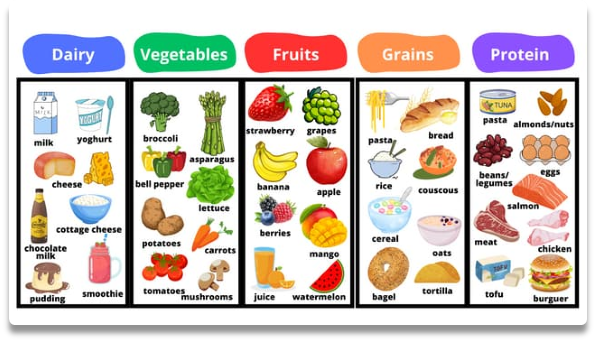
Estimated Energy Requirement
The EER is an estimate of how many calories a person needs to consume, on average, each day to stay healthy, based on their age, sex, height, weight, and physical activity level. For adults, the EER is meant to be a caloric intake that maintains energy balance, meaning that it won’t cause weight loss or gain. For children, the EER includes the energy needed for normal growth. For pregnant or lactating women, it includes energy needed for development of the fetus and other pregnancy requirements or for milk production
Total Daily Energy Intake
The Harris-Benedict equation estimates a person's Basal Metabolic Rate (BMR), the calories needed for basic bodily functions at rest, by factoring in age, sex, weight, and height.
For Men: BMR = 66.5 + (13.75 × weight in kg) + (5 × height in cm) – (6.75 × age in years)
For Women: BMR = 655.1 + (9.563 × weight in kg) + (1.85 × height in cm) – (4.676 × age in years)
To calculate Total Daily Energy Expenditure (Cal/day) , you multiply the BMR by an activity factor representing the individual's daily physical activity level
TDEE= BMR × DAL
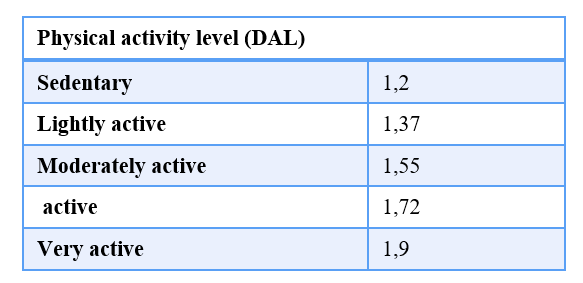
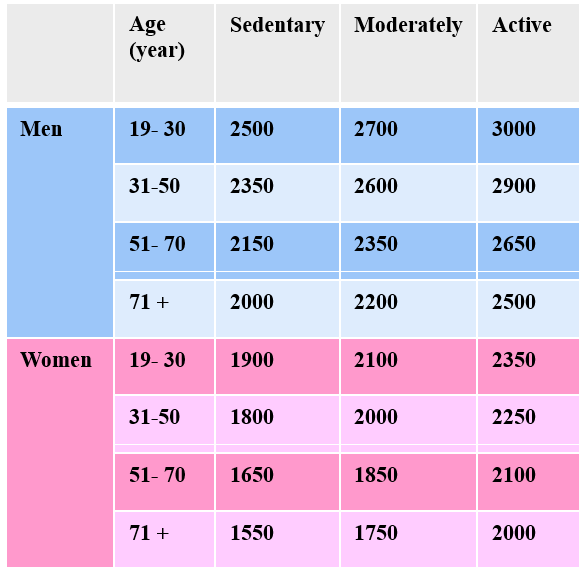
TDEE according to age, gender and level of physical activity (Cal/day).
Acceptable Macronutrient Distribution Ranges (AMDR)
The AMDR is the calculated range of how much energy from carbohydrate, fat, and protein is recommended for a healthy diet. The AMDRs are as follows: Carbohydrate 45-65%, Fat 20-35%, and Protein 10-35%. People who do not meet the AMDR may have increased risk of developing health complications
Energy food ration (Carbohydrates)
Carbohydrates are essential macronutrients that are the primary source of energy for humans. 1 gram of carbohydrate contains 4 kcal of energy. Carbohydrates are present in plant-based foods like grains, fruits, vegetables, and milk. Carbohydrates are ingested in the form of simple carbohydrates, like monosaccharides include glucose, fructose, and galactose and disaccharides lactose, sucrose, and maltose., or complex carbohydrates, like oligosaccharides raffinose and polysaccharides include greater than ten sugar units and consist of starches, glycogen, and fibers are plant polysaccharides like pectin and cellulose found in whole grains, fruits, vegetables, and legumes but are not digestible by humans. However, they play a major role in gut health and function which can be digested by microbiota in the large intestine. For healthy children and adults, carbohydrates should make up approximately 45 to 65% of energy. The recommended fiber intake is greater than 38 g for men and 25 g for women
Energy food ration (Lipids)
Lipids are essential macronutrients that are the main source of stored energy in the body, contribute to cellular structure and function, regulate temperature, and protect body organs. Lipids are found in fats, oils, meats, dairy, and plants. Consumed mostly in the form of triglycerides. One gram of fat contains 9 kcal of energy. For healthy children ages 1 to 3, ages 4 to 18, and adults, approximately 30 to 40%, 25 to 15%, and 20 to 35% of daily energy intake should come from fat, respectively. Approximately 5 to 10% and 0.6 to 1.2% of the daily fat energy intake should consist of omega 6 polyunsaturated fatty acids (linoleic acid) and omga 3 polyunsaturated fatty acids (α-linolenic acid), respectively.
Energy food ration (Proteins)
Proteins are essential macronutrients that contribute to structural and mechanical function, regulate processes in the cells and body, and provide energy if necessary. Proteins are composed of amino acids and are available in food sources like meats, dairy foods, legumes, vegetables, and grains. 1 gram of protein contains 4 kcal of energy. The recommended protein intake is 0.8 to 1 gram per kilogram of body weight per day. For healthy children ages 1 to 3, ages 4 to 18, and adults, approximately 5 to 20%, 10 to 30%, and 10 to 35% of daily energy intake should come from protein, respectively
Essential amino acids: among the 20 amino acids, 8 are said to be "indispensable" in humans because they are unable to synthesize them, and are: Phenylalanine, Tryptophan, Methionine, Lysine, Leucine, Isoleucine, Valine, Threonine and Histidine (child).
Nitrogen balance
Nitrogen balance can be described as a measure of the net change in total body protein. Protein contains approximately 16% nitrogen by weight, so 1 gram of nitrogen represents 6.25 grams of protein. Nitrogen balance is the difference between nitrogen excreted from the body and nitrogen ingested in the die
Nitrogen balance (g/day) = Nitrogen intake (g/day) – Total nitrogen output (g/day)
Nitrogen Balance (g/day) = (Protein intake in g/day / 6.25) - (Urinary Urea Nitrogen in g/day + 4)
the 4 accounts for nitrogen lost in other forms, such as fecal losses, sweat...
Normal, healthy adults are in neutral balance with a nitrogen balance that is equal to about + 0.5 g/d; During neutral nitrogen balance, whole body protein synthesis is equal to whole body protein degradation. If nitrogen balance is positive, the subject is in a net anabolic state, There is an increase in total body protein. This is the normal state in growth (including pregnancy), or recovery from injury or illness. whereas if the nitrogen balance is negative, the subject is in a net catabolic state. This is never normal, It is often a sign of nutritional risk or poor health, seen in conditions like trauma, infection, severe injury (such as burns), starvation,…etc.
Non-energy food ration: Water
Water is the largest single constituent of the human body and is essential for cellular homeostasis and life. Total body water , comprising extracellular fluid and intracellular fluid , averages approximately 60 percent of body weight, with a range from approximately 45 to 75 percent. Total water intake includes drinking water, water in beverages, and water that is part of food. The total water intake for young men and women is 3.7 L and 2.7 L per day, respectively
Non-energy food ration: micronutrients
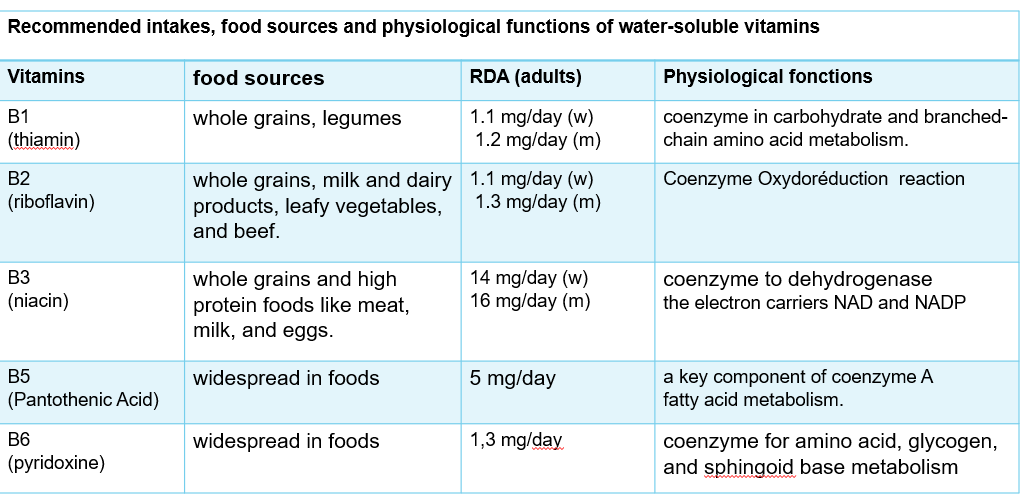
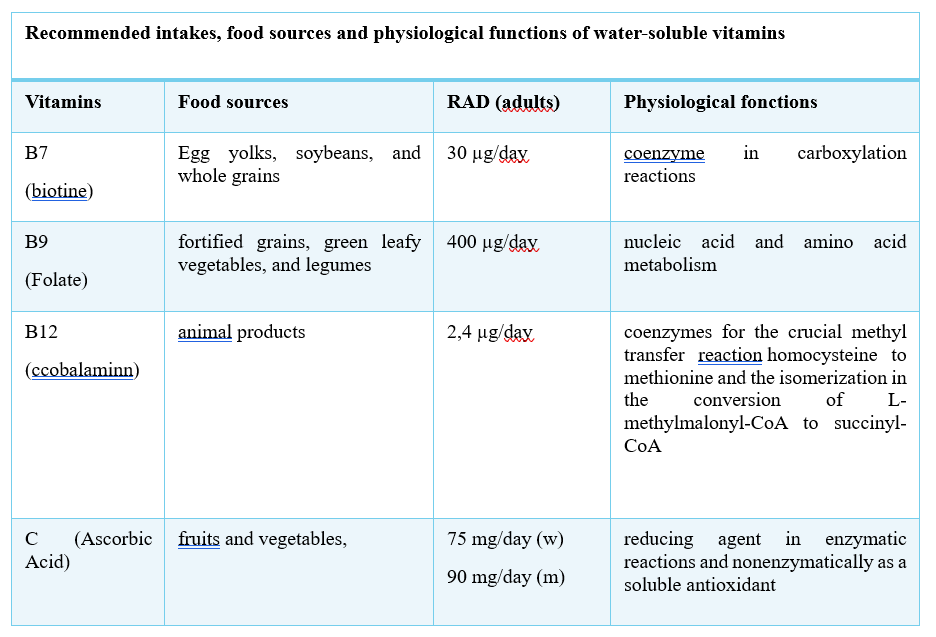
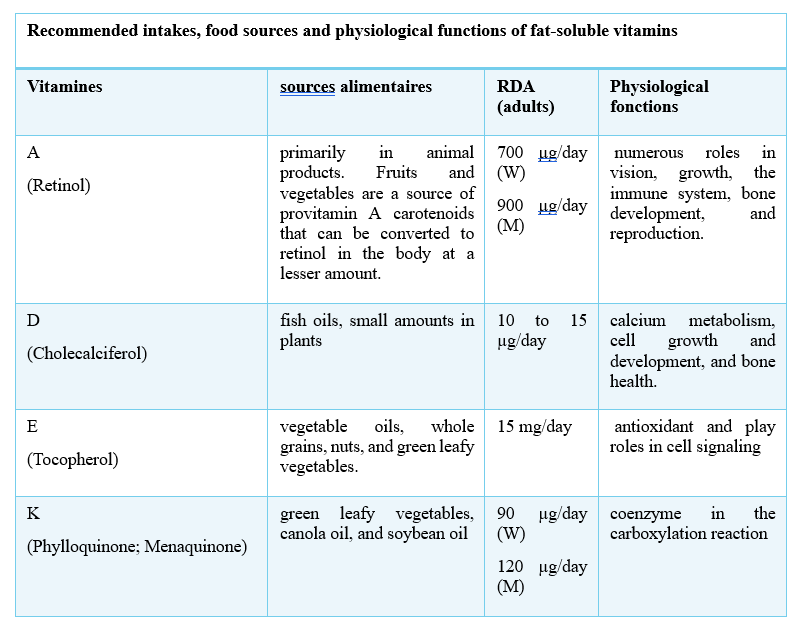
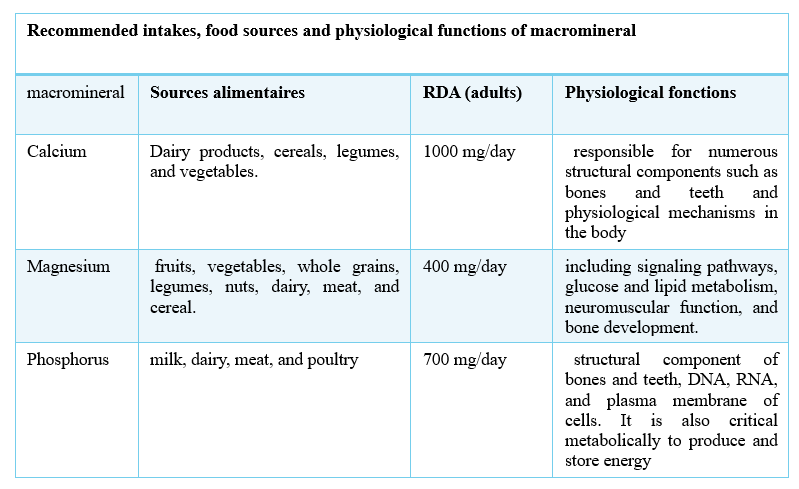
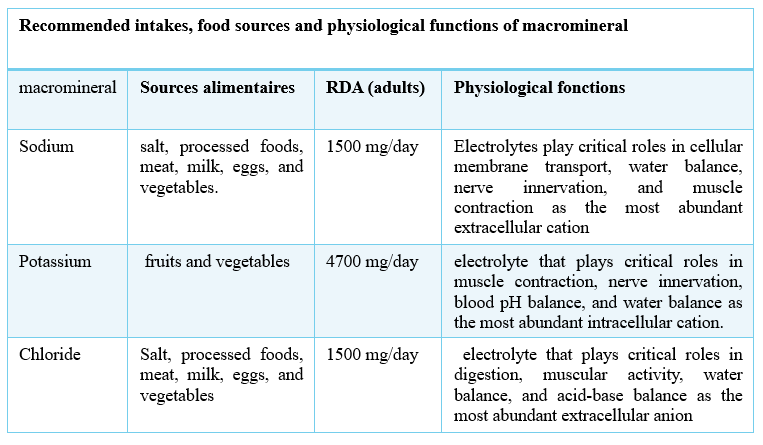
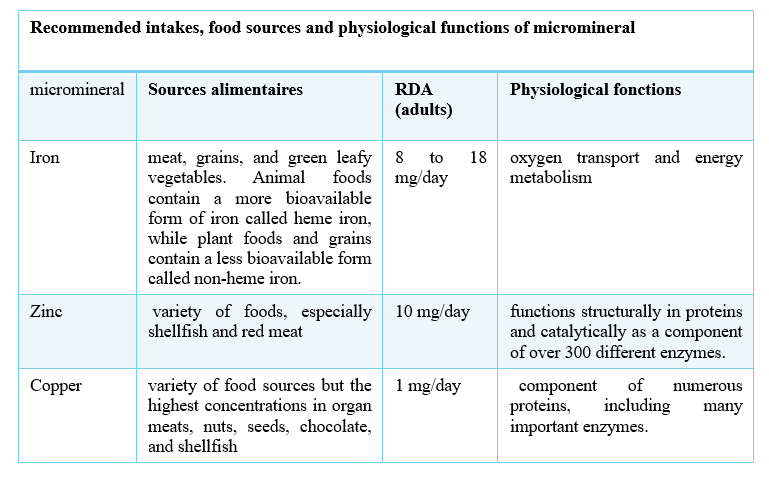
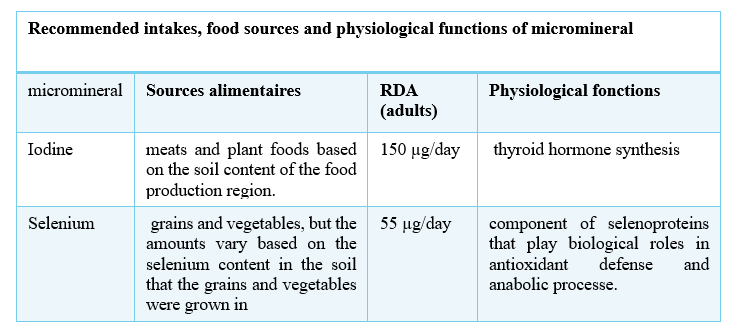
Vitamins are organic micronutrients classified as either water-soluble or fat-soluble. The essential water-soluble vitamins include vitamins B1, B2, B3, B5, B6, B7, B9, B12, and C. The essential fat-soluble vitamins include vitamins A, E, D, and K. Minerals are inorganic micronutrients. Minerals can classify as macrominerals or microminerals. Macrominerals are required in amounts greater than 100 mg per day and include calcium, phosphorous, magnesium, sodium, potassium, and chloride. Sodium, potassium, and chloride are also electrolytes. Microminerals are those nutrients required in amounts less than 100 mg per day and include iron, copper, zinc, selenium, and iodine.
Diet and Nutrient Requirements in Pregnancy and Breastfeeding
The caloric requirements for healthy, normal weight women with a moderately active lifestyle, undergoes a moderate increase during pregnancy (dependent on pregnancy stage) which can be met by slightly increasing energy intakes, 70 kcal/day in the first trimester to 260 and 500 kcal/day in the second and third, respectively), with an increase of about 500 kcal/day during the first 6 months of exclusive breastfeeding
RDA of protein intake during pregnancy, should be increased by 1 g/day in the first trimester of gestation, 8 g/day in the second trimester, and 26 g/day in the third trimester. Also during exclusive breastfeeding, habitual protein intake should be increased by 21 g/day in the first semester and 14 g/day later,
During pregnancy, the quality of fats is more important than their total amount, especially for fetal development and infant growth. For this reason, it is necessary to improve the relative proportion of polyunsaturated fats rather than to increase the intake of total fat
During pregnancy, micronutrient requirements increase more than those of macronutrients, and inadequate intakes (and, thus, a low nutritional quality of the diet) can have significant consequences for both the mother and the developing fetus.