
The maturation of premature ARNm takes place at the level of the nucleus and leads to changes in their structure.
- Addition of a cap (7 mg) at 5' and a tail (poly A) at 3' for most of the transcripts intended to become ARNm.
- Other modifications take place inside the nucleotide sequences.
- Pre-mRNA: the initial transcripts are found only in the nucleus. They are designated by the collective name of heterogeneous nuclear ARNm (HNRNAS). 25% of hnrnas are converted into mRNAs by excision of the introns and assembly of the exons. Concept of discontinuous genes and splicing (splicing) in eukaryotes.
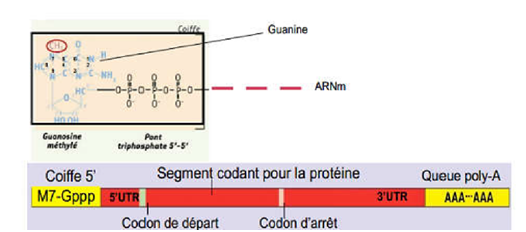
Figure 8: Addition of a methylated guanosine cap.
It is joined from A of the connection site. Thus, in addition to the 5' and 3' bonds of the skeleton, a third phosphodiester bond is formed between the 2'-OH of A with the P-5' of G. In the second reaction, the 3'-OH group of the released 5' exon changes its role and becomes a nucleophile which attacks the phosphoryl group at the 3' splicing site by joining the two exons and releasing the intron in lasso form (the released intron is linear for group I).
-The eukaryotic transcript contain non-coding sections (the introns) and coding sections (the exons). Splicing consists of removing the introns and then gluing the exons back together. The introns remain inside the nucleus and then are degraded. The splicing is catalyzed by snRNP (Small nuclear ribonucleotide Particles) plus other proteins. The whole constituting the splicesome. RNPs are multimolecular structures composed of proteins and small RNAs.U1 and U2 first attach to the pre-messenger, then U4 and u6 interact with U1 and U2, which brings the two exonic ends closer together. Then the catalytic activity of the splicesome makes it possible to cleave the intronic sequence and to ligate the exonic sequences.
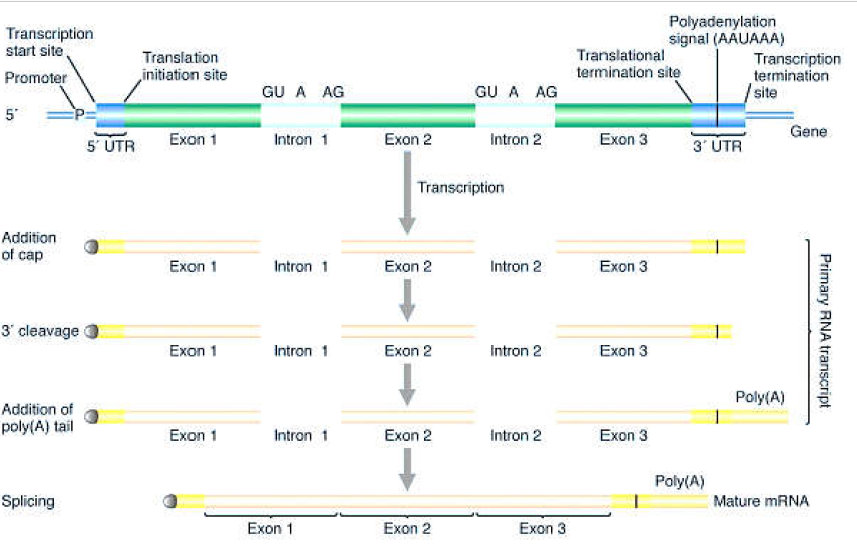
Figure 9: Summary of the stages of maturation of the RNA of eukaryotes.