
DNA replication is a very important mechanism, it allows the duplication of the genetic heritage to get 2 copies of each sent to one of the two daughter cells during cell division. The replication was, therefore, take place before the cell division.
This mechanism has to be the most faithful possible, so that the genetic heritage that will be passed on to daughter cells, is the most perfectly identical to that of the mother cell. In fact, the short-term survival of the cell and of the organism is dependent on the prevention of the change of its DNA, since the changes can lead to events extremely deleterious : mutations associated with certain pathologies (cancer). However, in the long term, there may be mutations that will lead to the evolution of the species.
DNA replication is a cellular mechanism of semi-conservative : on the double helix of DNA to the daughter cell, one of the two arms is derived from the strand parental and the other is synthesized during replication by polymerization (strand wire). Each strand parenting is read in the direction 3’to 5’, and serves as a matrix for the synthesis of a strand complementary and anti-parallel, called stranded wire or stranded néosynthétisé, synthesized in the direction 5’to 3’. For this, the two strands of the parental need to separate, a rupture of the hydrogen bonds is therefore necessary.
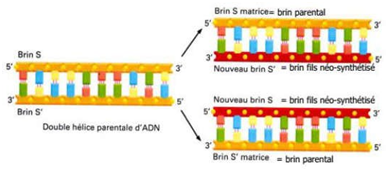
Figure 11: Summary diagram of the replication