Membrane transport

•To survive and ensure its biological function, the cell engages in exchanges with its environment: recovering the nutrients it needs, exchanging ions for activation, or eliminating molecular waste resulting from its activity. Exchanges are thus distinguished by active or passive transport.
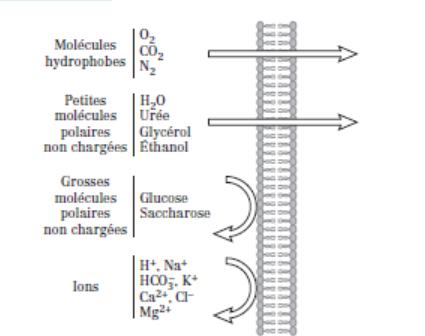
•The plasma membrane is selective: some components will be able to cross it, while others will not. The biochemical nature of the compound that must cross it is therefore essential.

Passive transport
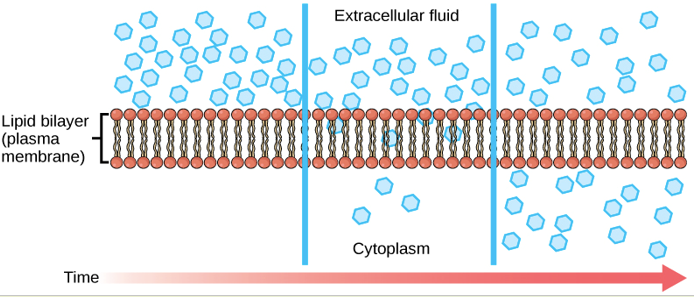
•Movement of solutes along their concentration gradient: from the medium with the highest solute concentration to the medium with the lowest solute concentration, until the two media reach the same concentration.
•Does not require energy.
•A distinction is made between simple diffusion and facilitated diffusion.

a) Simple diffusion

A solute crosses the lipid bilayer directly. This process therefore does not require a membrane transporter. The diffusion rate is proportional to the concentration difference between the two media; And inversely proportional to the size of the element to be transported.

Examples: O2, CO2, alcohol, fat-soluble molecules (fatty acids, steroid hormones)

b) Facilitated diffusion

The solute's passage is ensured through its interaction with a specific membrane transporter. This transport is called uniport. The transport speed is related to the number of membrane transporters. When all the transporters are saturated (occupied), the transport speed reaches a plateau and is therefore maximal. There are two types of facilitated transport:
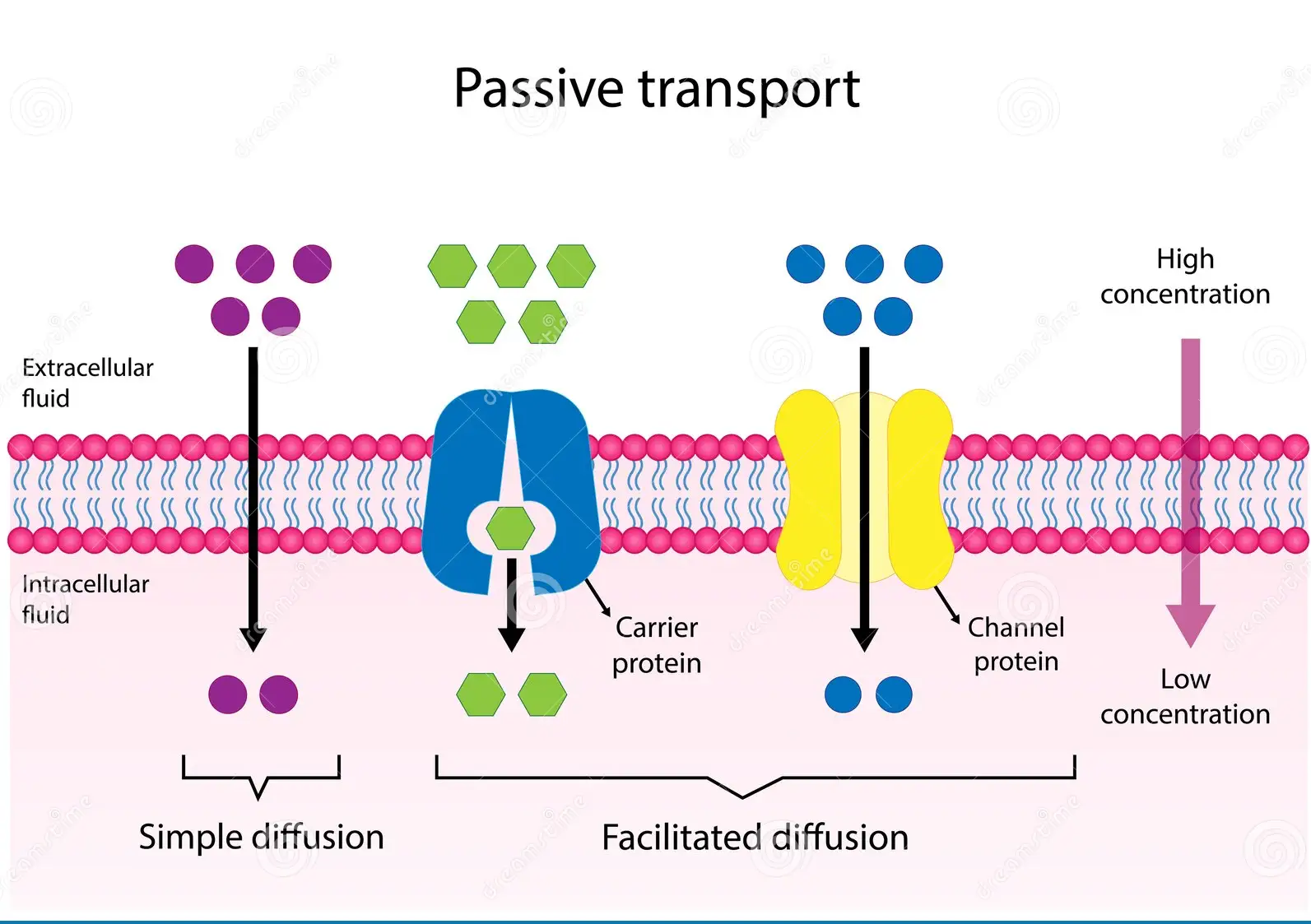
•Channel-facilitated diffusion. E.g., Na+ ion channel, K+ channel, H2O channel (aquaporin), etc.
•Carrier protein-facilitated diffusion Requires a conformational change in the transporter. E.g., transport of glucose (GLUT) present on the basement membrane of enterocytes.

Active transport
•Solute transport against its concentration gradient.
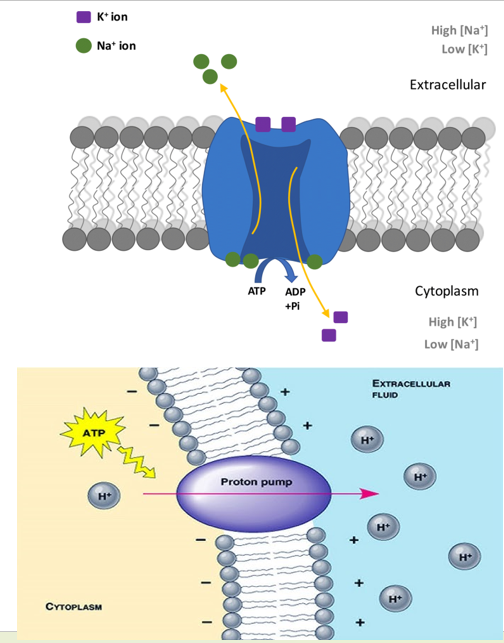
•Therefore, it requires energy. Depending on the type of energy provided, a distinction is made between primary and secondary active transport.

a) Primary active transport

Energy is provided by the hydrolysis of an ATP molecule. Synonym: ATPase pump. Ex: Na+/K+ ATPase pump (moves 3 Na+ out of the cell and 2 K+ in); H+ ATPase pump (moves H+ into lysosomes, causing their acidification).

b) Secondary active transport

Energy is provided by the co-transport of a solute (generally ions) along its concentration gradient.
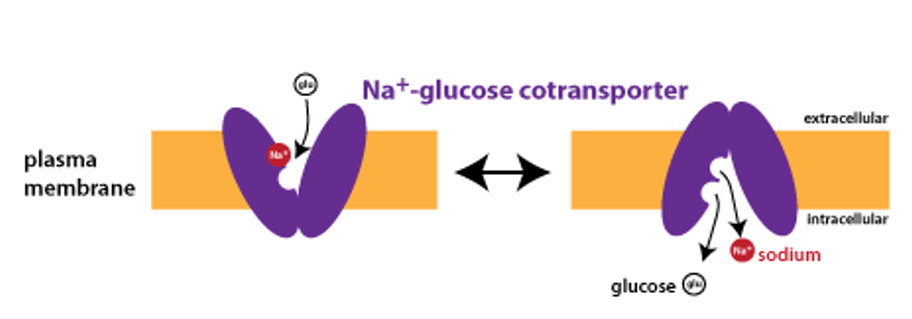
•If solute and co-transport move in the same direction: symport.
• In the opposite direction: antiport.

osmosis
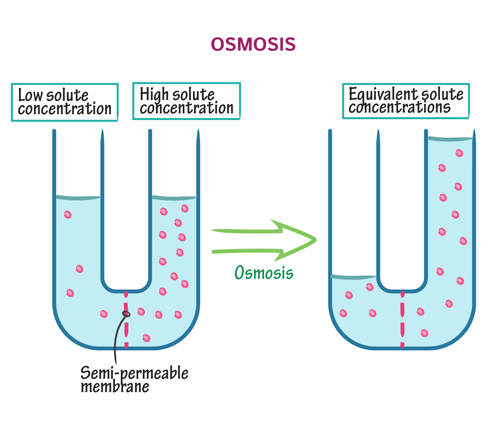
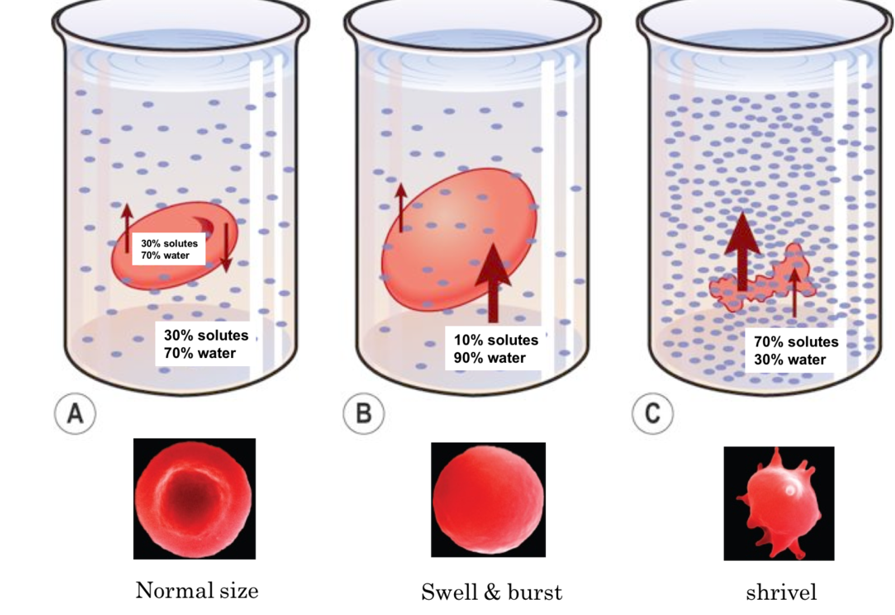
is the net movement of water across a semipermeable membrane. Across this membrane, water tends to move from an area of high concentration to an area of low concentration OR we can say that the water tends to move from an area of low concentration of solute  to an area of high concentration of solute

A hypertonic solution is any external solution with a high solute concentration and low water concentration compared to body fluids. In a hypertonic solution, the net movement of water is out of the body and into the solution. A cell placed into a hypertonic solution shrivels by a process known as plasmolysis. An isotonic solution is any external solution with the same solute and water concentrations as body fluids. In an isotonic solution, no net movement of water takes place. A hypotonic solution is any external solution with a low solute concentration and high-water concentration compared to body fluids. In hypotonic solutions, there is a net water movement from the solution into the body. A cell placed into a hypotonic solution swells until it bursts through a process known as cytolysis

Vesicular transport

•Some molecules (proteins for example) and particles are too large to cross membranes by membrane transporters. Their transport will therefore require movements of the plasma membrane to evacuate/ingest these molecules.
Exocytosis

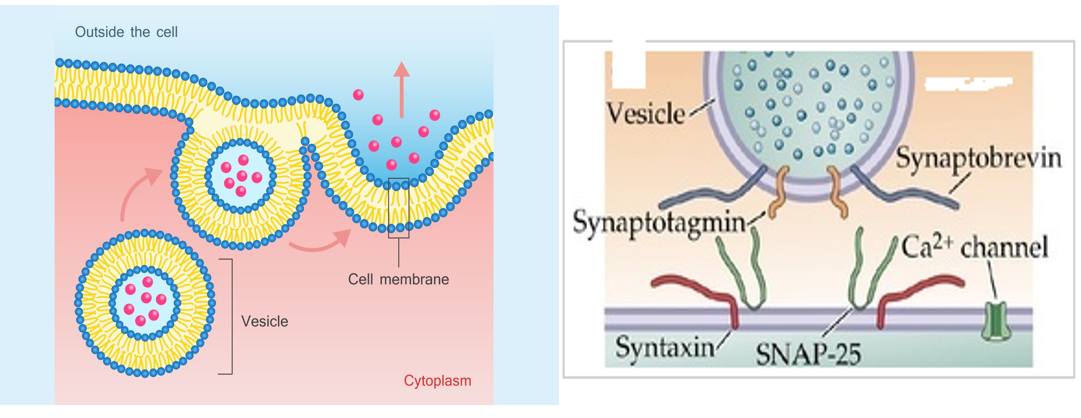
It involves the secretion/elimination of molecules present in the cell. Substances are enclosed in vesicles that fuse with the membrane and release their contents (e.g., waste, neurotransmitters, hormones) into the extracellular environment.

Vesicle formation and transport are energy-consuming processes. Fusion requires vesicle/plasma membrane recognition via protein complexes (v/t SNARE).

Endocytosis

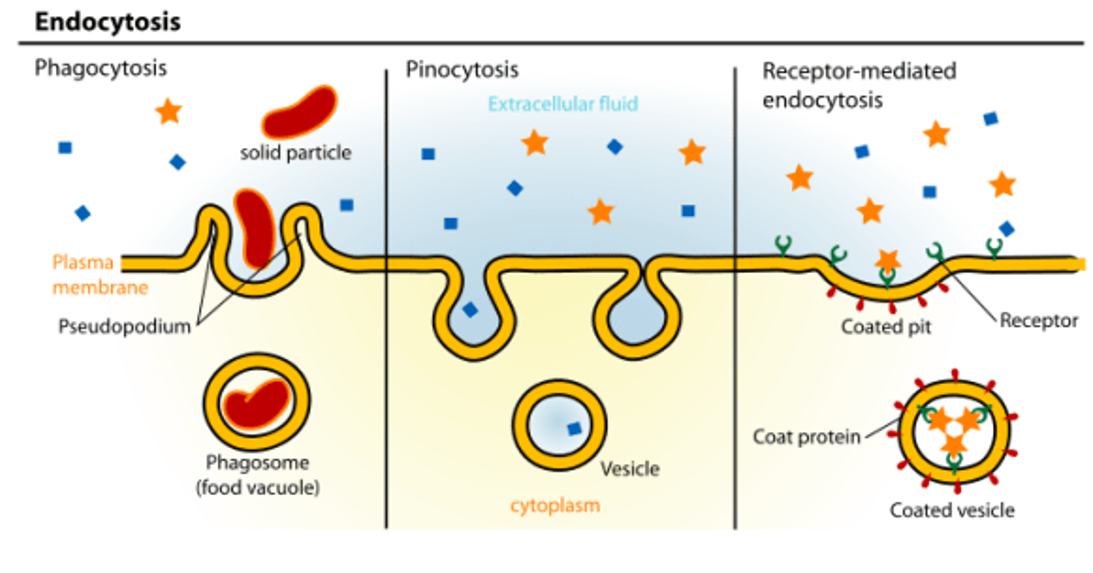
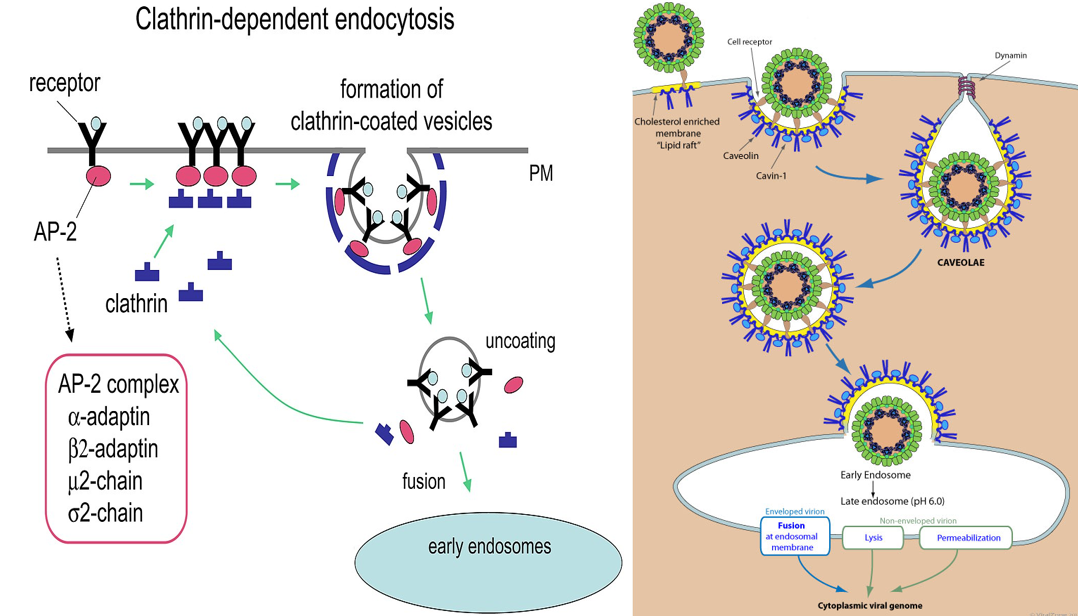
•The process by which a cell absorbs particles or solutes by enclosing them in vesicles through invagination of the plasma membrane. Several types of endocytosis are distinguished depending on the substances ingested and their size.
a)Phagocytosis

Endocytosis of large particles: bacteria, cellular debris.

b) Pinocytosis:

•Ingestion of suspended molecules taken from the extracellular medium (e.g., lipid droplets). This is a common phenomenon in most cells (especially renal and intestinal).

c) Receptor-mediated endocytosis

•Selective endocytosis that requires membrane receptors specific to the molecule to be ingested. The molecule/receptor complex is then endocytosed and localized in a vesicle


Modifié le: jeudi 11 décembre 2025, 17:00