
Chapter 04 : Physical chemistry of transport
phenomena (Nernst Law)
IV.5.Nernst equation and reversal potential
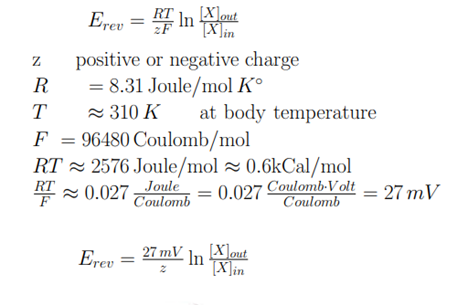
The Nernst equation defines the electrochemical equilibrium between a concentration gradient and an electrical potential, for one particular ion. The electrical potential that exactly balances a concentration gradient is called the reversal potential. The Nernst equation reveals how the reversal potential of an ion depends on the inside and outside concentrations of this ion:
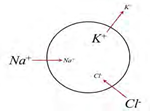
What can you say about the reversal potentials of N a+ , Cl−, and K+?c
IV.5.1.Example K+:
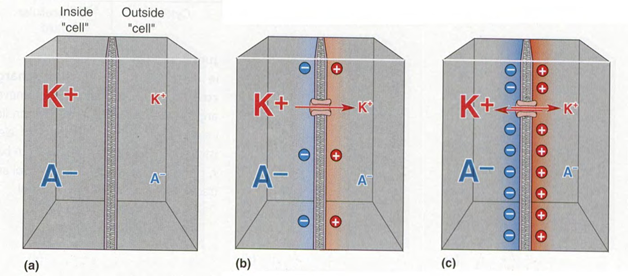
n Figure 48: High K+ concentration inside

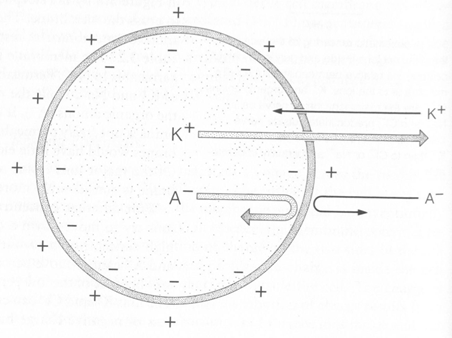
Figure 49 : K+ ions exchange.
IV.5.2.Example Na+:
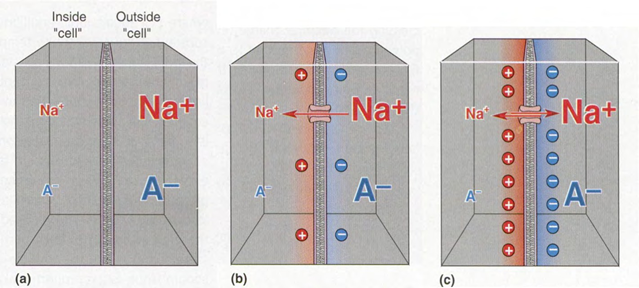 |
Figure 50 : High Na+ concentration outside!

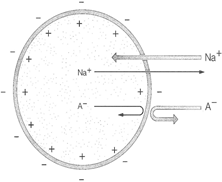
Figure 51: Na+ ions exchange.
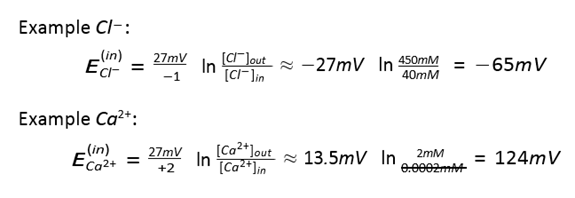
IV.5.3.Example Cl− and Ca2+:
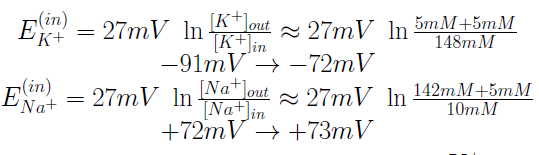
IV.5.4.Differential sensitivity to extracellular concentration
What is the effect of increasing extracellular concentration of either K+ and Na+ by 5 mM?
IV.5.5.Maintaining low extracellular K+
In the central nervous system (CNS), the resting potentials of neurons depend on low extracellular K+ concentration. To ensure this, the blood-brain barrier prevents the entry of K+ into the extracellular fluid. In addition, specialized glia cells (astrocytes) absorb extracellular K+ and distribute it over a large area (so that it can be pumped back into neurons).