
Chapter 3 : Membrane
Pumps(Electrolyte transport)
III.1.Introductionn
Although lipid bilayers provide a barrier to diffusion of ions and polar molecules larger than about 150 D, protein pores provide selective passages for ions, and other larger molecules across membranes. Integral proteins that control membrane permeability fall into three broad classes—pumps, carriers, and channels—each with distinct properties. These proteins allow cells to control solute traffic across membranes, an essential feature of many physiological processes.
III.2.Pumps
Pumps are enzymes that utilize energy from adenosine triphosphate (ATP), light, or (rarely) other sources to move ions (generally, cations) and other solutes across membranes at relatively modest rates. They establish concentration gradients between membrane-bound compartments.
III.3.Carriers
Carriers are enzyme-like proteins that provide passive pathways for solutes to move across membranes down their concentration gradients from a region of higher concentration to one of lower concentration. Each conformational change in a carrier protein translocates a limited number of solutes across the membrane. Carriers use ion gradients as a source of energy to perform a remarkable variety of work. Some carriers use translocation of an ion down its concentration gradient to drive another ion or solute up a concentration gradient.
III.4.Channels
Channels are ion-specific pores that typically open and close transiently in a regulated manner. When a channel is open, a flood of ions passes quickly across the membrane through the channel, driven by electrical and concentra-tion gradients. The movement of ions through open channels controls the electrical potential across membranes, so that changes in channel activity produce rapid electrical signals in excitable membranes of nerves, muscles, and other cells.
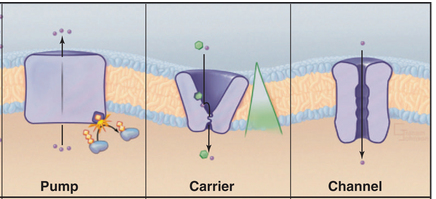
Figure 35 : properties of the three types of proteins that transport ions and other solutes across membranes.
III.5.Diversity of membrane pumps
A vast array of integral membrane proteins can capture energy from an external source to pump ions and other solutes across biological membranes. The protein families differ in their energy sources and transported materials. Fortunately, these pumps had a limited number of common ancestors, providing a relatively simple classification and generalizations about their structures and mechanisms. Given the importance of pumps in establishing transmembrane electrochemical gradients, the simplicity of this list is remarkable. Its brevity may be attributable to the fact that a single pump can drive a whole host of secondary reactions mediated by different carriers.
1. Ion pumps
2. ABC transporters (ATP-binding cassette transporters)
3. Light-driven pumps
Figure36 : membrane pumps
III.5.1. Ion pumps
Gradients are maintained (outside/inside) for Na+(145/10 mmol/l), K+ (4.5/160mmol/l), Ca2+ (1.5/<0.0001mmol/l) and Cl− (114/3 mmol/l) across the plasma membrane by the activity of ATP-dependent ion pumps and ion exchangers.
Ion pumps derive the energy to transport ions across membranes against their electrochemical gradient by using the energy of ATP hydrolysis directly. A number of important ion-transporting ATPases make important contributions to cellular physiology.
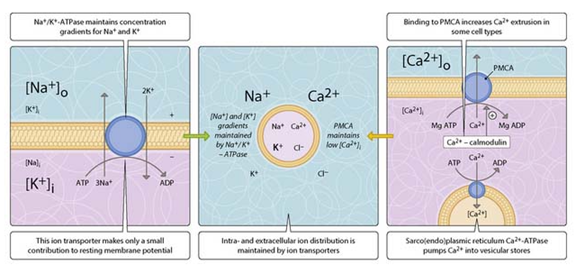
Figure37 : ion pumps
Within this group,
three subgroups can be distinguished:
v P-type pumps (phosphorylated)
v F-type pumps (F₀F₁)
v V-type pumps (vacuolar).
III.5.1.1. P-type pumps (phosphorylated)
A-The Na+/K+ pump
The Na+/K+ pump (Sodium-Potassium pump) is a vital enzyme in cell membranes that actively transports three sodium (Na+) ions out of the cell and two potassium (K+) ions into the cell for every ATP molecule used, moving ions against their concentration gradients to maintain cell volume, regulate resting membrane potential, and enable nerve signals, heart function, and secondary active transport.
How it works (The Cycle)
1. Binding: The pump binds three Na+ ions from inside the cell.
2. Phosphorylation: ATP is hydrolyzed (broken down), and the energy released phosphorylates (adds a phosphate group to) the pump, causing it to change shape.
3. Sodium Release: The pump opens to the outside of the cell, releasing the three Na+ ions.
4. Potassium Binding: Two K+ ions from outside the cell bind to the pump.
5. Dephosphorylation & Release: The phosphate group is removed, causing the pump to return to its original shape, opening to the inside and releasing the two K+ ions.
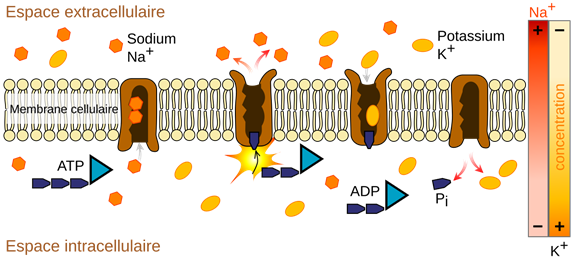
Figure 38: Na+/K+ pump (Sodium-Potassium pump)
B-Ca²+ ATPase pump
A Ca²+ ATPase pump is a protein that uses energy from ATP to move calcium ions (Ca²⁺) across cell membranes, maintaining low intracellular calcium levels crucial for cell signaling, often pumping Ca²⁺ out of the cytosol into the extracellular space (PMCA) or into organelles like the sarcoplasmic/endoplasmic reticulum (SERCA). These pumps, belonging to the P-type ATPase family, are vital for preventing calcium overload and regulating processes from muscle contraction to nerve function.
Key Types of Ca²+ ATPases
Ø PMCA(Plasma Membrane Ca²⁺-ATPase): Located in the plasma membrane, it pumps Ca²⁺ out of the cell, regulating overall cellular calcium levels.
Ø SERCA (Sarcoplasmic/Endoplasmic Reticulum Ca²⁺-ATPase): Found in the sarcoplasmic/endoplasmic reticulum, it sequesters Ca²⁺ into these internal stores, essential for muscle relaxation and other cell functions.
Importance
· Cell Signaling: Regulates calcium's role as a second messenger.
· Muscle Function: SERCA pumps are critical for relaxing muscles after contraction.
· Cellular Homeostasis: Prevents toxic calcium buildup within the cell.
How They Work (General Mechanism)
1. ATP Binding: The pump binds ATP, using its energy.
2. Phosphorylation: A phosphate group from ATP is transferred to the pump, forming a phosphorylated intermediate.
3. Conformational Change: This phosphorylation causes the pump to change shape, allowing it to bind Ca²⁺.
4. Ion Release: The pump then releases Ca²⁺ on the other side of the membrane.
5. Dephosphorylation: The phosphate group is removed, resetting the pump for another cycle.
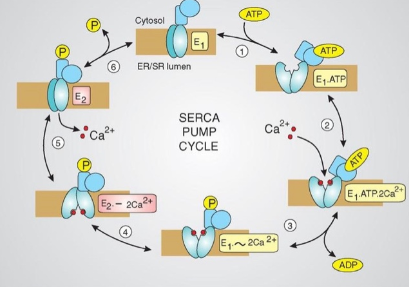
Figure39 :
Ca²+ ATPase pump
C-H+/K+-ATPase pump
The H+/K+-ATPase pump, also known as the proton-potassium pump, is an enzyme in stomach parietal cells that uses ATP energy to pump hydrogen ions (H+) out of the cell into the stomach lumen and bring potassium ions (K+) in, creating the acidic environment needed for digestion and activating pepsin. It's a crucial target for drugs like Proton Pump Inhibitors(PPIs) used to treat ulcers and acid reflux (GERD) by blocking acid secretion, and it also plays roles in kidney function, with different isoforms (HKα1, HKα2) involved in acid-base balance.
Key Functions & Location
Ø Gastric Acid Secretion: Its primary role is in the stomach's parietal cells, acidifying stomach contents.
Ø Active Transport: It actively transports H+ out and K+ in, powered by ATP.
The pump moves from intracellular stores to the cell's surface (apical membrane) when stimulated (by hormones like gastrin, histamine) and returns to storage when inactive.
Medical Significance
Ø Drug Target: It's the target of Proton Pump Inhibitors (PPIs) (e.g., omeprazole, lansoprazole) for treating conditions like peptic ulcers, GERD, and dyspepsia.
Ø Kidney Role: Renal H+-K+-ATPases (HKα1, HKα2 isoforms) also exist and are vital for potassium and sodium balance, and acid-base regulation in the kidneys.
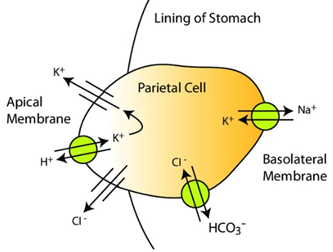
Figure 40: Gastric Acid Secretion Occurs via Hydrogen/Potassium ATPase